

Enhancing Exhibits with Immersive Tech Games
VIVA Creative • Insights
A 2026 perspective on experiential exhibit strategy from the VIVA Creative team
Capturing the attention of trade show attendees has never been harder, or more valuable. The floor is saturated with content, the tech is faster, and every square foot of an exhibit is now expected to earn its keep. The brands that stand out achieve an interesting juxtaposition of human authenticity blended with tech-forward storytelling using AI and XR, including AI avatars, generative experiences, and real-time personalized engagement.
If you are planning your 2026 exhibit strategy, consider these metrics that matter to brand and marketing leaders right now.
Some 2026 numbers to pay attention to
of attendees are more likely to buy after engaging with an exhibitor
Source: Trade Show Labs 2026
lift in engagement reported by exhibitors using AI-powered activations
Source: Trade Show Labs 2026 Trends
increase in booth dwell time from interactive and immersive AR/VR experiences
Source: Ticket Fairy 2026
higher engagement on booths that use gamification
Source: American Image Displays
Immersive technology is table stakes. The differentiator is how you use it.
The global extended reality market is estimated at $10.64 billion in 2026 and is projected to grow at a compound annual growth rate of 26.5 percent through 2030, according to IDC. Translation: your clients, your competitors, and your buyers are all going to see more immersive activations this year than ever before. The bar keeps rising.
Here is how we think about each layer of the immersive stack and where it actually earns its keep on a show floor.
Virtual Reality: the deepest dive
VR takes interaction to the next level by placing visitors inside a completely virtual environment where they can experience your product or service firsthand. Whether that is walking a virtual construction site with your latest equipment, stepping into a simulated operating room with your medical device, or exploring a factory floor powered by your software, VR delivers an intense, immersive experience attendees talk about for weeks. For medical and pharma, VR simulations are especially powerful for visualizing mechanism-of-action, surgical workflows, and detailed scientific visuals.
Augmented Reality: the everyday magnifier
With AR, you overlay digital elements onto the real world so visitors can interact with your products in novel ways using their smartphones or AR glasses. Imagine pointing a device at a simple poster and watching it come to life, showcasing your product's features in a dynamic, interactive way. AR is the workhorse of 2026 exhibit design because it scales. Every attendee walks in with a phone in their pocket, which means every attendee is an AR-ready device.
Mixed Reality and Extended Reality: the collaborative layer
Mixed Reality combines AR and VR so physical and digital objects coexist and interact in real time. Attendees can collaborate in a mixed-reality space to solve puzzles that reveal your product's benefits or explore its applications. Extended Reality pushes the boundaries further by merging AR, VR, and MR into a single fluid experience. With XR you can create highly engaging, multi-layered experiences that show off your brand's innovations, simulate product interactions, or transport attendees to virtual spaces that reflect your company's vision and ethos.
Momentum is shifting from traditional headsets toward smart glasses, and IDC projects XR device shipments will grow 33.5 percent in 2026 alone. That matters for exhibit strategy because the next generation of immersive activations will not require a headset handoff from a booth staffer. It will live on the attendee's own device.
AI avatars: the always-on booth concierge
Of every AI capability we are deploying at VIVA right now, AI avatars are the one generating the biggest reaction. An AI avatar is a conversational, human-scale digital presenter, displayed on a large screen or volumetric display, that handles the most common questions a visitor will ask about your product or brand. The avatar greets visitors personally, asks what they are interested in, routes them to the right demo or team member, captures basic contact information, and facilitates interactions with staff.
Here is what makes AI avatars genuinely useful, not gimmicky, in 2026:
They are multilingual out of the box. At a global medical convention where half the attendees speak a language other than English, an AI avatar can greet, inform, and qualify visitors in their native language the moment they walk up. No translator required.
They deliver a consistent brand voice. Every visitor gets the same on-message, on-brand answer to the same question, whether it is 9 AM on day one or 4 PM on day three when your human staff is exhausted.
They scale one-to-many. A single avatar station can handle three or four attendee interactions in the time a human rep would handle one, and the system can log every conversation for analysis later.
They free up your highest-value humans. Product experts and KOLs can focus on qualified deep-dive conversations while the avatar handles top-of-funnel queries. That is a meaningful economic unlock for booth staffing.
They integrate with CRM and badge scanners. The avatar's captured conversation, sentiment, and interest tags flow directly into your sales pipeline in real time.
Exhibitors using AI-powered activations, including AI avatars and AI chatbots, are reporting engagement lifts of up to 45 percent compared with traditional booth experiences. At a 30,000-attendee convention, that is the difference between a good booth and a pipeline-defining one.
Generative AI: content that adapts in real time
Generative AI is doing something that was science fiction two years ago: creating personalized visual content for each individual visitor, in under 30 seconds, live on the show floor. Attendees walk up, interact briefly, and walk away with a branded, shareable, hyper-personalized piece of content they did not have before they arrived. That content then travels home in their camera roll and onto their social feeds.
What's possible:
Generative portraits that place attendees inside branded environments, wardrobe concepts, or future scenarios tied to the brand story.
Real-time generative art walls where a visitor's name or response generates a unique digital artifact displayed on a mosaic wall for everyone to see.
Adaptive product demos where the content on screen reshapes itself based on the visitor's role, specialty, or stated interests, captured in a 10-second intake.
AI-generated case study summaries that produce a one-page takeaway customized to the attendee's industry before they leave the booth.
The activations driving real business results in 2026 share three things: they create personalized content attendees actually want to share, they capture meaningful data through natural conversation instead of clipboard lead forms, and they extend your brand's reach far beyond the physical event.
Projection mapping meets gamification: the booth that becomes a playable space
Projection mapping turns walls, floors, ceilings, and clear surfaces into living canvases. Layer gamification on top and the booth itself becomes a playable space. Attendees move, point, compete, and collaborate, and the environment responds to them in real time.
Gamification is one of the most statistically proven booth performance multipliers. The data:
Gamification boosts engagement by 60 percent.
Booths with thematic, immersive design concepts see 40 percent higher engagement than traditional product-display booths.
Interactive floor projections deliver the highest engagement per square foot of any exhibit element, which matters when you are paying $80+ per square foot for booth space.
In 2026, we are deploying generative projection mapping, where AI creates game assets in real time based on scanned architecture. A booth can tell a different story every hour of the show.
Assisted vs. unassisted engagement: finally, you can measure both
For decades, the biggest gap in exhibit measurement was the inability to quantify what happened when a visitor engaged with your booth without talking to a rep. Badge scans told you who was at the booth. Lead forms told you who talked to staff. But everything in between, the visitor who spent four minutes watching a demo loop and walked away, was invisible.
That gap is closing in 2026. The same technology stack we use to build immersive experiences now also lets us measure what is happening inside them, without disrupting the visitor's experience.
What we are now able to measure:
Assisted engagement: number of staff-led conversations, average length, sentiment, topics raised, and conversion to follow-up meeting, captured through CRM-connected badge scans and staff tablet apps.
Unassisted engagement: visitors who interacted with a demo station, AR moment, AI avatar, or gamified experience without a staff handoff, captured through computer vision cameras and interactive surface analytics.
Dwell time per zone: average time attendees spend in each section of the booth, which tells you which stories are working and which are getting skipped.
Heatmaps: a visual density map of how attendees move through the booth, revealing dead zones and engagement peaks.
Content consumption depth: which videos, demos, and interactive modules were played, for how long, and to completion.
Lead prioritization signals: AI systems now analyze dwell time, interaction depth, and conversation topics to auto-score leads in real time so the sales team knows who to call first before the show ends.
Industry research shows interactive displays, AR and VR demos, and gamified elements can increase booth dwell time by 30 to 40 percent and lead capture by up to 35 percent. Knowing that, and being able to prove it with your own dashboard, changes how you defend your exhibit budget to your CFO.
What we are seeing at medical conventions specifically
Medical and pharma conventions are one of the most exciting spaces for applied AI right now because the audience is highly credentialed, the content is highly technical, and the stakes on every interaction are high. Here is what the most forward exhibit teams are doing in 2026:
Pre-show AI personalization that analyzes registration data, publication history, and specialty to pre-build a customized booth experience for top KOLs before they even arrive.
AI-powered symptom-to-solution storytelling that lets a physician describe a patient case verbally and watch the exhibit visualize the full treatment pathway on demand.
Micro-targeted zones within the booth for different specialties, roles, and use cases, staffed by AI avatars specific to each sub-audience.
In-booth generative AI that produces an on-brand clinical summary, tailored to the physician's specialty, as a take-home piece.
Year-round community building where the exhibit is just the launching point for an ongoing KOL engagement program, supported by continuous AI-driven content personalization.
Real-time measurement frameworks that track the entire customer journey from first booth touch to closed hospital system deal, giving brand teams the proof of ROI their leadership is asking for.
The classics still work. They just work harder now.
Two exhibit plays have been around for years and they still convert, especially when paired with the new stack.
Interactive product case studies
Let visitors explore and manipulate your product with simple gestures, via touchscreen, motion sensor, or spatial interface. In 2026, we pair these with AI so the case study adapts to the visitor's role or industry in real time. A hospital administrator and a surgeon standing at the same station see two different stories.
Retro games reimagined
Classic games reimagined with modern tech still deliver some of the highest engagement we see on any floor. They work because they are instantly familiar, they invite play, and they give staff a natural conversation opener. The modern twist in 2026 is that the gameplay data feeds directly into your engagement analytics, so even a minute of play becomes a trackable data point.
The principle that ties it all together
The goal of every immersive technology in an exhibit is the same: make the visitor feel something about your brand that they could not feel any other way.
AI avatars, AR, VR, XR, projection mapping, gamification, engagement analytics. These are tools. The strategy is what decides whether they earn the investment. Every interaction has to enrich the attendee's understanding of your product and advance your business objectives at the same time. That is the work we come to first at VIVA. Before we design a single pixel or source a single piece of hardware, we ground ourselves in the business objectives, audience, and measurable outcomes.
Ready to rethink what your booth can do?
Elevate your trade show presence with AI avatars, generative content, immersive AR, VR, and XR experiences, projection-mapped gamification, and end-to-end engagement analytics that prove the investment. Reach out to VIVA Creative to learn more.
Share This Article



Explore All Work
Explore Our
Recent Work
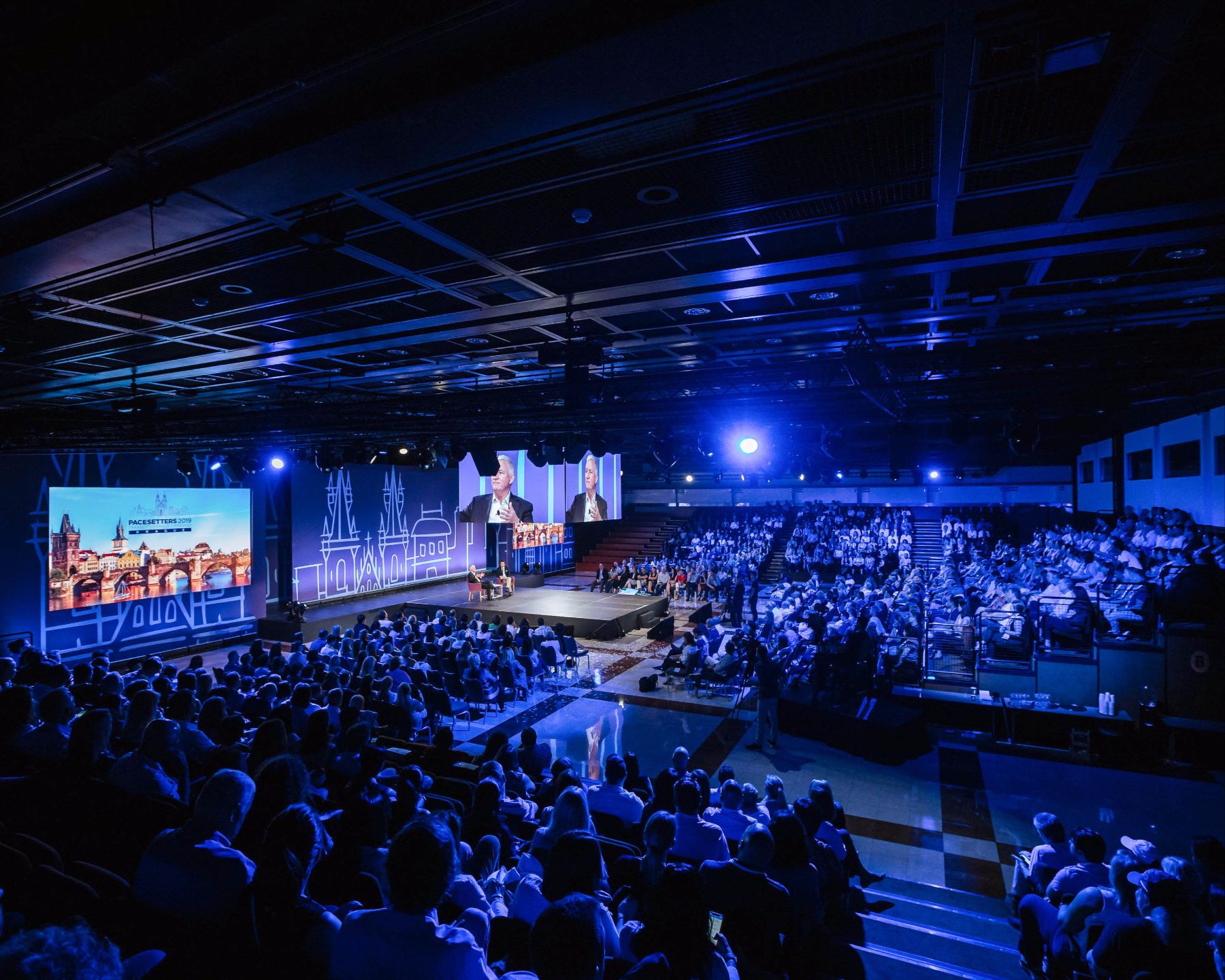
AMERICAN EXPRESS GLOBAL BUSINESS TRAVEL CONFERENCE
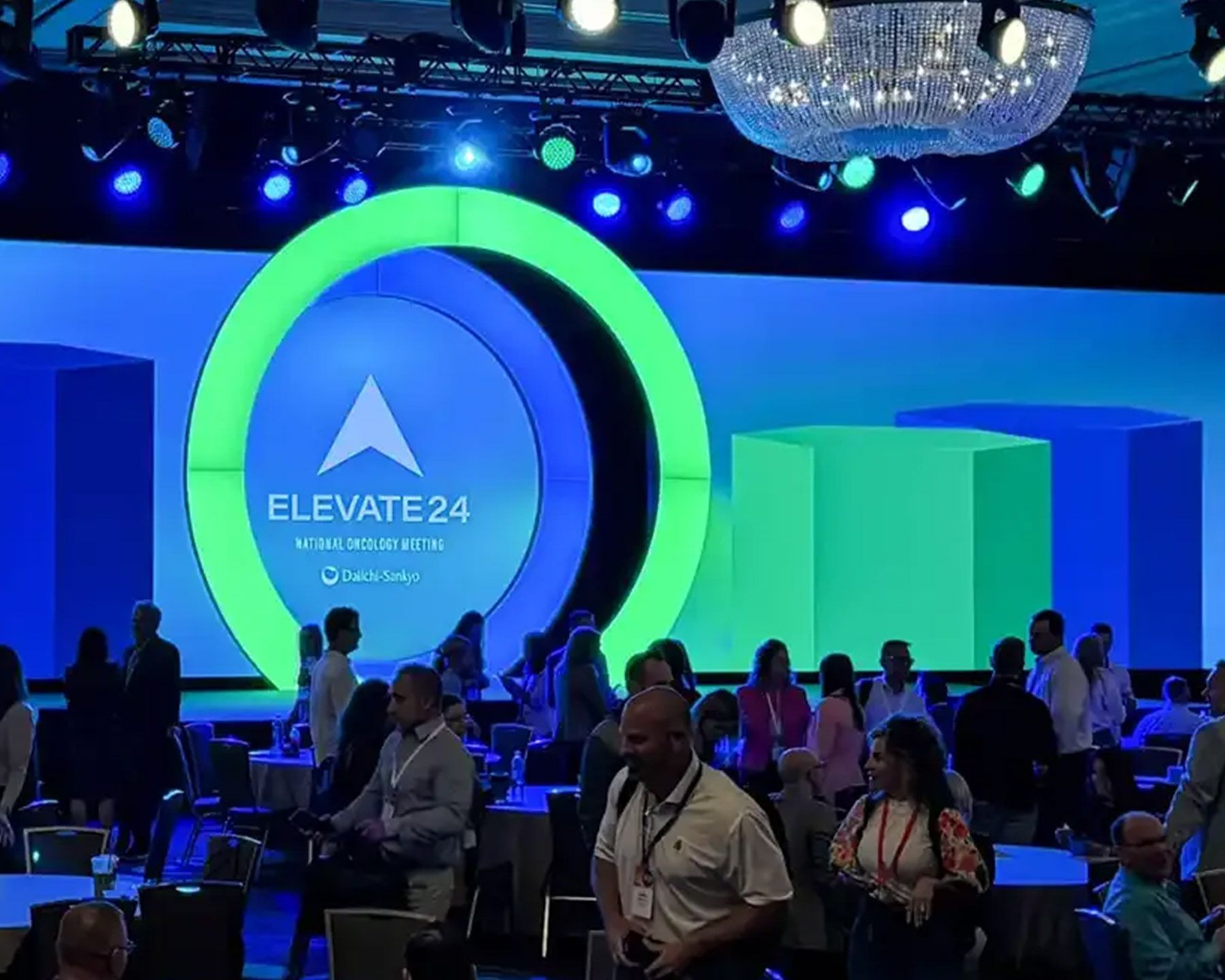
DAIICHI SANKYO NATIONAL LEADERSHIP CONFERENCE

AN OPRAH SPECIAL: SHAME, BLAME AND THE WEIGHT LOSS REVOLUTION